


| Quick Answer A commercial AI smart cooler usually costs about $3,500 to $8,000 per unit in 2026, with frozen and large multi-door models going higher. On top of that, expect a software/cloud fee of roughly $40 per month, connectivity, and payment fees of 3–6% of sales. In a good location, a smart cooler can pay for itself in 6 to 12 months; in low-traffic sites it can take 18 months or more. |
Key takeaways
- Don’t compare machines on sticker price alone — total cost of ownership (TCO) over 3 years decides profitability.
- Biggest hidden costs: monthly software, per-transaction fees, location commission and stock waste.
- A complete, factory-tested machine avoids integration problems and support gaps.
- Payback is driven mostly by foot traffic and average basket size, not by the machine itself.
How much does an AI vending machine cost? (2026 price ranges)
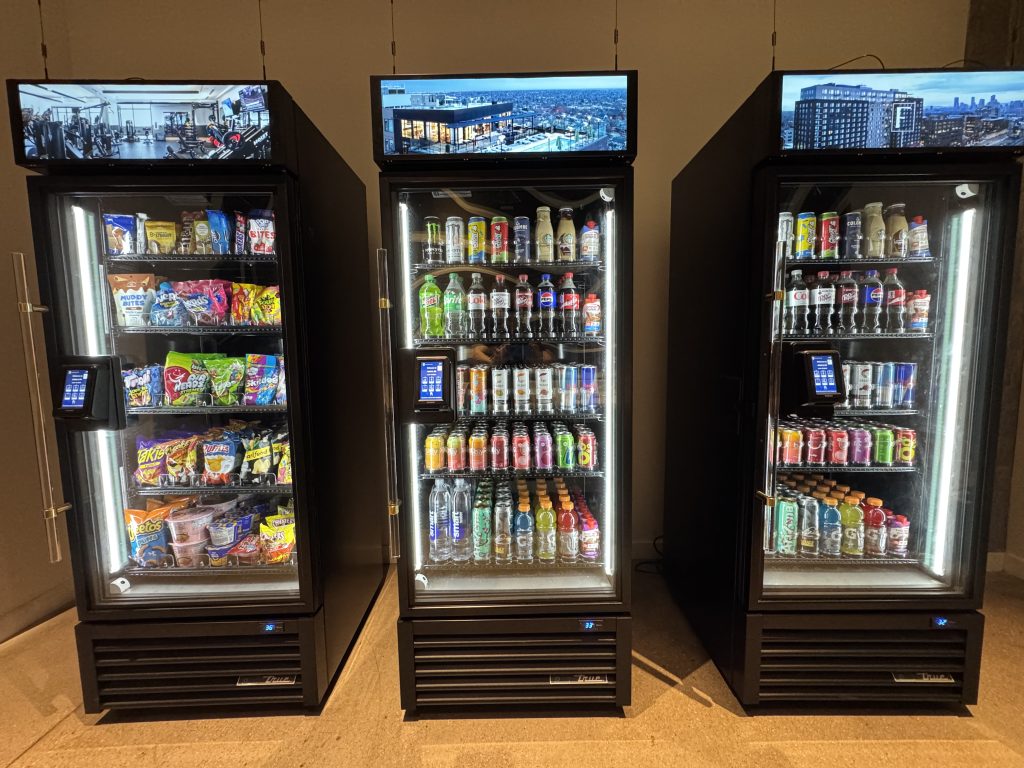
Prices vary a lot because “AI vending machine” covers everything from cheap imported units to commercial-grade coolers with full support. Public 2026 listings put commercial AI smart coolers roughly between $3,500 and $5,500, with frozen units between $4,000 and $7,000 (VMFS USA buyer’s guide), and premium frozen food machines up to around $16,880.
| Machine type | Typical price (USD) | Best for |
| Single-door AI smart cooler | $3,500 – $5,500 | Offices, gyms, hotel lobbies |
| Double-door / combo AI cooler | $4,000 – $8,000 | Hospitals, universities, busy offices |
| AI freezer (frozen food / ice cream) | $4,000 – $7,000+ | Ice cream, frozen meals |
| Premium large-capacity frozen | Up to ~$16,900 | High-volume frozen food sites |
| Budget imported units | $600 – $1,800 (often with MOQ) | Testing only; check support & accuracy |
Not sure which type you need? Start with how AI vending machines work, then compare SandStar’s AI smart coolers and freezers.
What drives the price up or down
- Vision system quality: number of cameras, edge-computing power, size of the trained product library.
- Sensor fusion: weight sensors added to cameras improve accuracy on look-alike products but add cost.
- Cabinet type: freezers and multi-door units cost more than single-door coolers.
- Payment hardware: card + NFC + QR terminal, and regional certification.
- Certifications: CE, RoHS, REACH, UL/ETL for specific markets.
- Warranty and support: SandStar states a warranty of up to 7 years — check what parts and labour each supplier actually covers.
- Order quantity: volume and distributor pricing lower the per-unit cost.
Hidden and ongoing costs to budget for
| Cost item | Typical range | Notes |
| Software / AI cloud fee | ~$40 per month per machine | Dashboard, app, updates |
| Connectivity (4G) | ~$15 per month | Free if on site Wi-Fi |
| Payment processing | 3% – 6% of sales | Some vendors also charge per transaction |
| Electricity | $25 – $60 per month | Depends on cooler size and local tariff |
| Location commission | 0% – 15% of sales | Negotiated with the host site |
| Opening inventory | $400 – $800 | One-time, then working capital |
| Delivery & installation | Varies | Heavy units ~150 kg; check freight |
Public listings show monthly software in the $39.99–$40 range, and operating costs (data, cloud, firmware) averaging about $42–$68 per month before electricity and restocking.
ROI example: how fast does an AI smart cooler pay back?
Below is an illustrative calculation. Plug in your own numbers — the structure matters more than the exact figures.
Assumptions: machine + setup = $5,800 (machine $5,000 + $800 inventory/installation), average basket = $3, gross margin on products = 45%, payment fees = 5%, location commission = 10%, software $40, connectivity $15, electricity $40 per month.
| Line item (per month) | Busy office (40 sales/day) | Quiet site (15 sales/day) |
| Revenue (× $3 × 30 days) | $3,600 | $1,350 |
| Gross profit at 45% | $1,620 | $608 |
| – Payment fees (5% of sales) | – $180 | – $68 |
| – Location commission (10%) | – $360 | – $135 |
| – Software + connectivity | – $55 | – $55 |
| – Electricity | – $40 | – $40 |
| Net profit per month | $985 | $310 |
| Payback on $5,800 | ~6 months | ~19 months |
The same machine pays back three times faster in the busy site. That’s why location is the #1 ROI lever — far more than a few hundred dollars difference in machine price.
[Add a real SandStar customer example here with permission: location type, sales per day before/after, payback achieved.]
AI vending vs traditional vending: cost comparison
| Factor | Traditional coil machine | AI smart cooler |
| Upfront price | Often lower | Similar to higher |
| Average basket | Usually 1 item | Multiple items per session |
| Product range | Snacks, cans | Adds fresh food, dairy, premium items |
| Maintenance | Coils/motors jam | Few moving parts |
| Stock visibility | Manual checks | Real-time dashboard |
| Shrinkage control | Low | Every session recorded |
Higher basket size and a wider, higher-margin range are why many operators earn back the price premium of AI coolers. More on the technology differences in What Is an AI Vending Machine?.
Buy, lease or partner?
- Buy new: full control and best for new sites; highest upfront cost.
- Lease / financing: spreads cost; check total interest over the term.
- Become a distributor: if you plan to deploy many machines or sell to others, distributor pricing and support change the economics. See the SandStar partner program.
7 ways to cut cost and pay back faster
- Place machines where traffic is high and alternatives are few (night shifts, upper floors, remote campuses).
- Stock higher-margin items — fresh meals, premium drinks — not just cheap snacks.
- Use sales data to drop slow sellers within the first 30 days.
- Negotiate location commission against the convenience you provide.
- Pick the right cabinet size — don’t pay for capacity you can’t sell.
- Use promotions and bundles from the dashboard to lift basket size.
- Buy in volume or through a distributor to lower unit price.
Questions to ask any AI vending supplier before you buy
- What is the measured recognition accuracy, and how was it tested?
- What exactly does the monthly fee include? Any per-transaction AI fee?
- How many SKUs are pre-trained, and how fast can new products be added?
- What does the warranty cover (parts, labour, cameras, compressor) and for how long?
- Which certifications apply in my country?
- Do you store any biometric or facial data?
| Get an accurate quote Every site is different. Compare SandStar’s AI smart vending machines, or if you want to build a vending business in your region, apply through the SandStar distributor program. |
Frequently asked questions
How much does an AI vending machine cost?
Most commercial AI smart coolers cost about $3,500 to $8,000 per unit in 2026, plus around $40 a month for software and 3–6% in payment fees. Frozen and large-capacity models cost more.
Is an AI vending machine worth the money?
It usually is in sites with steady daily traffic. Multiple items per visit, a wider product range and lower maintenance help many smart coolers pay back within 6–12 months. In very quiet locations payback can stretch past 18 months.
What is the payback period of a smart cooler?
Typically 6 to 20 months, depending mainly on sales per day, average basket and margin. In our example, 40 sales a day paid back a $5,800 investment in about 6 months, while 15 sales a day took about 19 months.
What are the monthly costs of running an AI vending machine?
Expect software and cloud (~$40), connectivity (~$15 if not on Wi-Fi), electricity ($25–$60), payment fees (3–6% of sales) and any location commission. Restocking labour and product cost are extra.
Should I buy or lease an AI vending machine?
Buying gives the lowest total cost if you have the capital and a proven location. Leasing spreads the cost and suits first-time operators, but check the total interest and what happens at the end of the term.
Do AI vending machines have hidden fees?
Some do. Check for per-transaction AI recognition fees, payment processor fees, connectivity charges and paid software tiers. Ask for a full 3-year cost-of-ownership sheet before signing.
Can I finance an AI vending machine?
Many suppliers and equipment lenders offer leasing or financing. Distributors may also get demo units or staged payment terms — check with SandStar’s partner team.